Building a healthier and more resilient community through public health initiatives and policy advocacy.
Our Community Health Initiatives
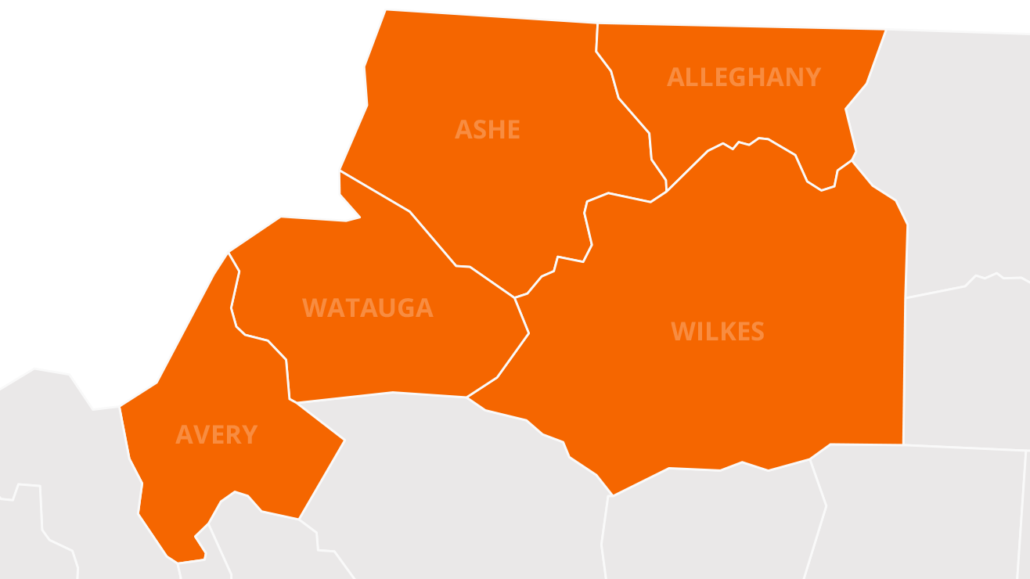
WYN’s Community Health team works to support an equitably safe and healthful High Country for youth and families. Serving a five-county region- Alleghany, Ashe, Avery, Watauga, and Wilkes – Community Health staff partner with local agencies and community members to identify and address needs. This program currently receives funding from the following: Substance Abuse Prevention and Treatment Block Grant, Strategic Prevention Framework – Partnerships for Success, Drug Free Communities, Preventing Underage Drinking Initiative, Behavioral Health Equity Initiative, Community Behavioral Health Integration Initiative, and Boone ABC.
Staff utilize primary prevention strategies to reduce risk factors and improve protective factors by addressing root causes, also known as the social determinants of health (SDOH). According to the World Health Organization, the SDOH are the non-medical factors that influence long-term health outcomes. They are the conditions in which people are born, grow, work, live, and age, and the wider set of influences and systems shaping the conditions of daily life. This includes economic policies and systems, development agendas, social norms, social policies and political systems. The SDOH also have an important influence on health inequities – the unfair and avoidable differences in health and safety seen within and between individuals and communities.
Service Area
Examples of the social determinants of health:
-
Income and social protection
-
Education
-
Unemployment and job insecurity
-
Working life conditions
-
Food insecurity
-
Housing, basic amenities and the environment
-
Early childhood development
-
Social inclusion and non-discrimination
-
Structural conflict
-
Access to affordable, quality health services
Areas of Advocacy & Action
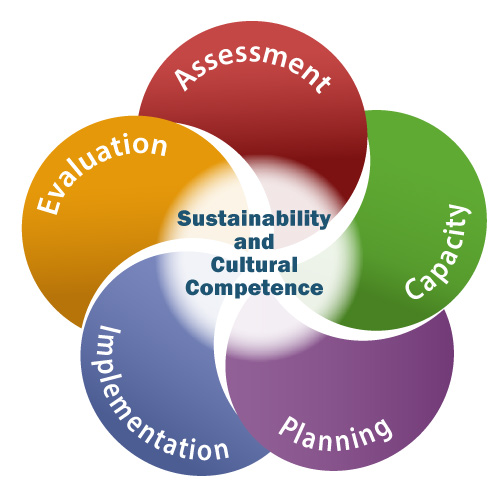
In order to address SDOH, the Strategic Prevention Framework (SPF) guides this work through assessment, capacity building, planning, implementation, and evaluation, with sustainability, equity, and cultural humility as the foundation. This process is used to identify and implement evidence-based strategies tailored to each community.
Within the SPF process, WYN’s Community Health team uses the 7 Strategies for Community Change which is vital in preventing substance misuse and supporting mental health. Successful implementation of these strategies discourages alcohol and substance use among youth. It can influence the home and community environment, which leads to changing attitudes, social norms, and behaviors. Select a strategy below to see how they are implemented locally.
Provide Information
Information is provided to communities through social media, radio shows, public service announcements, educational materials, local events, and billboards.
Enhance Skills
Knowledge and skills of staff and community members are enhanced through retailer education, outreach, coalition building, webinars, training, and workshops such as racial and LGBTQ+ equity, trauma, adverse child and community experiences, and resiliency.
Provide Support
Opportunities for activities that strengthen youth resilience are provided across WYN’s programming such as evidence-based mentoring, after-school, summer camp, and youth advocacy and leadership. Staff recruit, hire, and train Youth Advocates from Watauga High School to build the capacity of their peers to address substance use issues and provide alternative activities that enhance protective factors such as healthy coping skills.
Enhancing Access Reducing Barriers
Improving systems and processes to increase the ease, ability, and opportunity to support an equitably safe and healthful community is essential to Community Health work. Home medication lock boxes are distributed throughout communities with support from the NC Lock Your Meds campaign, designed to increase awareness among parents/caregivers about proper use, storage, and disposal of prescription medications. The Talk it Up. Lock it Up! initiative is utilized to ensure alcohol is monitored and securely locked at home, including youth and family involvement through education and advocacy. Through partnerships with local law enforcement, Boone Drug Pharmacy, Appalachian State University, and Project Lazarus of Wilkes, permanent medication drop boxes are located throughout Watauga County to provide community-wide access to safe medication disposal to prevent diversion and opioid misuse.
Incentives & Disincentives
Through communication and media collaboration, local businesses and retailers are publicly recognized for their hard work and positive outcomes with regards to training staff, requesting proper identification, and preventing youth access to alcohol, tobacco and nicotine-containing products such as e-cigarettes, vapes, and Juul’s.
Change Physical Design
Prevention strategies such as ensuring proper alcohol and tobacco/vape retailer signage and tobacco/e-cig/vape-free school campus signage are used to change the structure of the community environment in order to prevent youth access, reduce risk, and enhance safety.
Modify & Change Policies
Staff work to support inter and intra-policy initiatives to address substance use prevention, the social determinants of health, equity, trauma, and teleworking. WYN Community Health staff work with local school systems to review and improve school substance use policies and follow-up services for students. Staff also work with the North Carolina Alcohol Policy Alliance in supporting the state alcohol monitoring system.
Our Work in Action
Prime For Life®
Prime For Life® is an alcohol and substance intervention program designed to challenge common beliefs and attitudes that directly contribute to use. It provides a judgment-free way of understanding how alcohol and substance-related issues develop, what can be done to prevent them, and why asking for help is important.
Prime For Life® helps to shift attitudes, beliefs, and risk perceptions, bringing behavior change within reach. The curriculum creates a unique self-assessment opportunity to enhance awareness of personal values and what is at risk from the consequences of substance use.
Community Coalitions
Community Health staff participate in many collaborative community-based committees and coalitions throughout the High Country.
Alleghany Wellness Coalition
Alleghany Youth Task Force
Ashe Health Alliance
Alleghany Youth Task Force
Ashe Health Alliance
Ashe Youth Task Force
Avery Youth Prevention Coalition
Watauga Compassionate Communities Initiative
Watauga Substance Action & Prevention
Project Lazarus Wilkes Youth Coalition
Watauga Compassionate Communities Initiative
Watauga Substance Action & Prevention
Project Lazarus Wilkes Youth Coalition
Community Partners
Effective Community Health work is only possible with leadership and active participation from numerous essential community partners.
School districts
Universities and community colleges
Local government leaders
Medical providers
Healthcare community
Mental & behavioral health services
Faith-based organizations
Law enforcement agencies
Child Care Providers
Maternal and child health services
Universities and community colleges
Local government leaders
Medical providers
Healthcare community
Mental & behavioral health services
Faith-based organizations
Law enforcement agencies
Child Care Providers
Maternal and child health services
Social services
Non-profit organizations
Local businesses
Youth
Non-profit organizations
Local businesses
Youth
Parents
Media
Youth-serving organizations
Civic and volunteer groups
Guardian ad-Litem
Civic and volunteer groups
Guardian ad-Litem
Community Initiative Statistics
1,500
Prevention resources received by youth in Ashe & Alleghany counties in 2020
48.8%
Decrease in reported high school alcohol use since the creation of the Watauga Substance Abuse Prevention (WSAP) Coalition in 2009
51,010
Total number of people reached through Communication Campaigns in 2020
281
Medication Lock Boxes distributed in 2020
88,000
People reached via WSAP Billboards in 2020
114
Prime For Life® participants in 2020
134 Doctors Drive, Boone, NC 28607
(Watauga Office)
(828) 264-5174
(828) 264-0838
info@westernyouthnetwork.org
Avery County Programs: (828) 783-9181
Connect


At WYN, we value what makes you unique, in fact, we celebrate it. We believe that when people feel respected, it provides space for them to thrive. Inclusion and acceptance fosters a safe environment for everyone. WYN is committed to providing a safe space for all, regardless of race, gender, age, religion, identity, ability, and experience. Together, we explore diverse perspectives to propel our initiatives forward and transform the High Country community. Everyone is welcome here, authentically and holistically.